



Selling Your Business? Do-It-Yourself is Risky Business!

When the owner of a business makes the decision to sell, he or she is taking a giant step that involves the emotions as well as the marketplace, each with its own set of complexities. Those sellers who are tempted to undertake the transaction on their own should understand both the process and the emotional environment that this process is set against. The steps outlined below are just some of the items for a successful sale. While these might seem daunting to the do-it-yourselfer, by engaging the help of a business intermediary, the seller can feel confident about what is often one of the major decisions of a lifetime.
Table of Contents:
1. Set The Stage.
What kind of impression will the business make on prospective buyers? The seller may be happy with a weathered sign (the rustic look) or weeds poking up through the pavement (the natural look), but the buyer might only think, “What a mess!” Equally problematic can be improvements planned by the seller that appeal to his or her sense of aesthetics but that will, in fact, do nothing to benefit the sale. Instead of guessing what might make a difference and what might not, sellers would be wise to seek the advice of a business broker–a professional with experience in dealing regularly with buyers and with an eye experienced in properly setting the business scene.
2. Get The Record(S) Straight.
Although outward appearance does count, what’s inside the books is even more important. Ultimately, a business will sell according to the numbers. The business broker can offer the seller invaluable assistance in the presentation of the financials.
3. Weigh Price Against Value.
All sellers naturally want to get the best possible price for their business. However, they also need to be realistic. To determine the best price, a business broker will use industry-tested pricing techniques that include ratios based on sales of similar businesses, as well as historical data on the type of business for sale.
4. Market Professionally.
Engaging the services of a business broker is the key to the successful marketing of a business. The business broker will prepare a marketing strategy and offer advice about essential marketing tools–everything from a business description to media advertising. Through their professional networks and access to data on prospective buyers, business brokers can get the word out about the business far more effectively than any owner could manage on an individual basis.
Copyright: Business Brokerage Press, Inc.
Wavebreak Media Ltd./BigStock.com
The post Selling Your Business? Do-It-Yourself is Risky Business! appeared first on Deal Studio – Automate, accelerate and elevate your deal making.

What You Should Know About Selling Your Business
There can be no doubt that selling your business stands as one of the most complex and important decisions you’ll likely ever make. It is quite often the case that a business represents decades, or even a lifetime, of dedicated work. In this article, we’ll examine some of the key steps that you should take when it comes time to sell.
One of the most important steps that any seller can take is to begin the sales process far in advance of the date that he or she plans to put the business on the market. Working with an experienced business broker or M&A advisor (and doing so preferably years in advance) is one of the single best ways to ensure that you’ll be ready to sell your business when the time comes. It will also help you to avoid the numerous pitfalls that potentially await.
A good brokerage professional can also help identify weaknesses in your business and help you address those issues; however, this is only the beginning. Your broker can help you with everything from strategy and negotiations, maintaining confidentiality and establishing the market value of your business, to connecting you with other seasoned professionals, such as accountants and lawyers.
A third key point that all sellers should consider is their own psychology. It is vital that all sellers remain flexible in their approach to selling their business and also remain respectful of prospective buyers. It is important that you put yourself in the shoes of your buyer and try to think of what they will need to feel confident in their decision.
The right seller psychology is also absolutely essential. Sellers should not attempt to rush or force a sale or overprice their business. In short, you need to keep “your head in the game” and as much as possible, keep your emotions out of the process.
Sellers also need to realize that the statistics strongly indicate that seller financing is likely. Only 75% of sellers ultimately receive their asking price, and businesses that are listed as “all cash” generally don’t sell. Reasonable sales terms will greatly increase the chances of successfully selling a business. It is common that sellers fail to realize just how much interest they can generate by financing the sale of their business. A reasonable down payment is also another way to improve the odds of selling a business. Being willing to offer financing makes a clear statement to a prospective buyer that you believe in the business and its ability to generate revenue. From a buyer’s perspective an “all cash” demand can be a red flag.
At the end of the day, an open mind and steady temperament will increase your chances of selling. You may want to sell your business and completely move on to new things. But the reality of selling a business is such that “walking away” may not be feasible. Transitioning your business into the hands of a new owner is usually more of an ongoing process than a “sign on the dotted line and receive a check” type of situation. Understanding this fact, and working closely with a business broker or M&A advisor in advance of selling your business, will help to streamline the sales process and greatly improve your chances of a successful outcome.
Copyright: Business Brokerage Press, Inc.
The post What You Should Know About Selling Your Business appeared first on Deal Studio – Automate, accelerate and elevate your deal making.

The Psychology of Selling – Are You Sure You’re Ready?
More than likely, selling your business is one of the biggest decisions of your life. Unless you own a business, it is impossible to understand just how all-encompassing of a process it can be. With that stated, it is important for business owners to step back and seriously reflect on whether or not they are truly ready to sell. The psychological aspects of selling are not trivial. Various aspects must be taken into consideration before initiating the process to sell.
Table of Contents:
There are many reasons why it is vital to step back and think about whether or not you are really ready to sell your business. Far too many business owners believe they are ready to sell, only to discover (much too late) that an executed sale is not optimal for their plans.
Selling When There is No Other Choice
Selling a business because there is no other choice, such as situations concerning failing health, personal issues or problems with a business partner, isn’t a true choice at all. In this situation, the psychology of selling is essentially irrelevant, as you have one option, namely, to sell.
The Case of Burnout
In other cases, owners eventually hit a brick wall and have no choice but to consider selling. As burnout sets in, owners may feel that the time is right to “hang up their hat” and put their business up for sale. However, as the process evolves, even those experiencing some level of burnout can discover that they are not emotionally or psychologically ready to sell. In many cases, people make this realization only once it is too late.
Take the Time for Self-Reflection
Quite often, a company becomes interwoven into a business owner’s sense of self, sense of place in the world and even, to an extent, sense of self-worth and identity. When business owners are unaware of this fact, it can be something of a shock to their system to begin the sales process. Many people simply are unaware of the strong hold that their business has on them.
Owners need to invest some time in self-reflection and ask four key questions: Do I really want to sell? If the answer is yes, then why do I want to sell? Will I regret selling once my business is sold? What will I do after I have sold my business? Answering these questions involves far more than evaluating your business. They also involve diving into emotional issues that could be central to your future.
Are You Really Ready to Sell?
One of the best ways of determining whether you are ready to sell, and preparing your business for that potential sale, is to work with a business broker or M&A advisor. Business brokers are experts at helping business owners deal with every aspect of the process of selling a business. They can act as experienced guides that can use that experience and expertise to help you determine if you are truly ready to sell.
If it turns out that you are indeed ready to sell, a brokerage professional can help you prepare so that you can achieve the best price possible once your business hits the market.
Copyright: Business Brokerage Press, Inc.
The post The Psychology of Selling – Are You Sure You’re Ready? appeared first on Deal Studio – Automate, accelerate and elevate your deal making.

When Should You Think About Selling Your Small Business?
There are many reasons why small companies are put up for sale. Some of the more common reasons can actually have little to do with the company’s general performance. For example, many small business owners discover that they need to sell for health reasons or personal concerns, such as divorce or partnership issues. While a business downturn or fear of a larger competitor looming on the horizon might prompt many business owners to sell, economic drivers are not the only issue. Owners may want and need to sell, but often it isn’t always that simple.
Many business owners are looking to retire, but are unpleasantly surprised to learn that they simply can’t afford to do so. Still yet, many business owners don’t truly want to retire or sell, but instead they just want more freedom in their lives. The day-to-day responsibilities of owning and operating a small business can take their toll. Many business owners are looking to make a change and would love to be free of this burden. This class of owner has already “checked out” mentally, and this can have profound negative consequences for their businesses.
When an owner wants out but discovers that he or she simply can’t afford to sell or retire, it will come as no surprise that there is usually an accompanying drop off in enthusiasm. Ultimately, the vast majority of owners will start to lose focus. Often, we find that they stop investing the capital necessary to continue the growth of the business, which can trigger other events, such as the loss of key staff members and/or customers. Losing a top customer to a major competitor can further accelerate the downward spiral. The failure of the business to maintain its footing and competitive advantage can lead to a more aggressive posture by existing competitors or even encourage a new competitor to move into the market.
In time, the owner may come face-to-face with the harsh realization that they have no choice but to sell if they are to salvage any of the business’s value. The best way for a business owner to safeguard against this situation is to sell when his or her business is doing well, as this helps to ensure an optimal price.
Working with a business broker, even years before one is interested in selling, is one of the single smartest moves any business owner can make. The time to think about selling your business is now, as no small business owner knows what life or the market will bring.
Copyright: Business Brokerage Press, Inc.
The post When Should You Think About Selling Your Small Business? appeared first on Deal Studio – Automate, accelerate and elevate your deal making.

John Warrilow’s The Art of Selling Your Business
John Warrilow is the founder of The Value Builder System and an accomplished author. While not a business broker himself, Warrilow has gathered considerable knowledge and expertise on the industry. His previous book, Built to Sell, was listed as one of the best business books of 2011. In this article, we will explore some of the key points in Warrilow’s latest book, which is entitled The Art of Selling Your Business: Winning Strategies and Secret Hacks for Exiting on Top. This book was released on January 12th, 2021, and is proving to be invaluable for business owners.
Table of Contents:
Selling When the Time Is Right
One key focal point of the book is that business owners should skip trying to find the perfect “magical time” to sell their business. Additionally, Warrilow notes, “I make the strong recommendation in the book that the best time to sell your company is not during some mysterious macroeconomic environment. It is when someone is willing to buy it, and you get an offer. And that is because at that point, you’re in the position of strength.”
The DIY Approach
This book reinforces the fact that business owners truly need to work with an intermediary if they are to achieve optimal results. Warrilow even includes his six reasons why every business owner should hire a business broker or M&A advisor.
Many business owners think that they can simply handle selling their business on their own. But the simple fact is that business owners usually have no experience in selling a business. Add this to the fact that selling their business is likely to be the most important financial decision the business owner ever makes, and it quickly becomes clear that business owners are doing themselves a considerable disservice when they opt to handle everything on their own.
A Business Broker vs. A Lawyer
As Warrilow points out, oftentimes, business owners think that rather than working with a business broker or M&A advisor, they can turn to a trusted lawyer who has served them in the past. But this thinking is flawed when it comes to successfully selling a business. As Warrilow states, “a lawyer, almost by default, is going to be very conservative as everything exposes a lawyer to risk. And that is why using a traditional attorney is almost always a mistake.”
If you are planning to sell your business now or in the future, a book like Warrilow’s The Art of Selling Your Business: Winning Strategies and Secret Hacks for Exiting on Top can serve as a uniquely valuable tool in your toolbox.
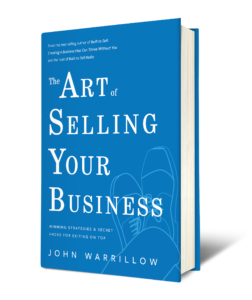
Copyright: Business Brokerage Press, Inc.
The post John Warrilow’s The Art of Selling Your Business appeared first on Deal Studio – Automate, accelerate and elevate your deal making.

The Importance of Owner Flexibility
You shouldn’t expect to sell your company overnight. For every company that sells quickly, there are a hundred that take many months or even years to sell. Having the correct mindset and understanding of what you must do ahead of time to prepare for the sale of your company will help you avoid a range of headaches and dramatically increase your overall chances of success.
First, and arguably most importantly, you must have the right frame of mind. Flexibility is a key attribute for any business owner looking to sell his or her business. There are many variables involved in selling a business, and that means much can go wrong. An inflexible owner can even irritate prospective buyers and inadvertently sabotage what could have otherwise been a workable deal.
Table of Contents:
Be Flexible on Price
A key part of being flexible is to be ready and willing to accept a lower price. There are many reasons why business owners may fail to achieve the price they want for their business. These factors range from lack of management depth and lack of geographical distribution to an overreliance on a handful of customers or key clients. Of course, one way to address this problem is to work with a business broker or M&A advisor in advance, so that such price issues are minimized or eliminated.
Be Prepared to Compromise
In the process of selling your business, you may want to achieve confidentiality and sell your business quickly and for the price you want. However, the fact is that most sellers find that it is possible to have confidentiality, speed, and the price you want, but not all three. Ultimately, you’ll have to pick two of the three variables that are most important to you.
Be Patient
A third way in which business owner flexibility can boost the chances of success is to embrace the virtue of patience. By accepting the fact that businesses can “sit on the shelf” for a considerable period of time, you are shifting your expectations. This realization can help reduce your stress level. The fact is that stressed-out owners are far more likely to make mistakes.
Sometimes Losing is Really Winning
A fourth way in which business owners should be flexible is realizing that you and your lawyer will not win every single fight. There will be many points of contention, and a smart dealmaker realizes that it is often better to have a good deal than a perfect deal. You may have to make sacrifices in order to sell your company. Simply stated, you shouldn’t expect the other side to lose every point.
At the end of the day, a savvy business owner is one who never loses sight of the final goal. Your goal is to sell your business. Seeing the situation from the buyer’s perspective will help you make better decisions on how you present your business and interact with prospective buyers. Maintaining a flexible attitude with prospective buyers helps to position you as a reasonable person who wants to make a deal. Goodwill can go a long way when obstacles do arise.
Copyright: Business Brokerage Press, Inc.
The post The Importance of Owner Flexibility appeared first on Deal Studio – Automate, accelerate and elevate your deal making.

How to Optimize Your Chances of Selling Your Business
The simple fact is that selling your business is likely to be the single most important financial decision you’ll ever make. With this important fact in mind, you must prepare far in advance. Let’s dive in and take a look at some of the key items you’ll want to check off your list before placing your business on the market.
Table of Contents:
- Think About Legalities
- Deal with Serious Buyers
- Be Flexible on Price
- Improving Your Chances for Success
Think About Legalities
When it comes to selling a business, legal issues should be at the forefront of your thoughts; after all, selling your business does involve the creation and execution of a complex and detailed legal agreement. There are many times in life where it is possible to cut corners, but hiring a good lawyer or law firm is not one of those times. Moreover, you’ll want to settle all litigation, environmental issues or other issues that could potentially derail a sale.
Deal with Serious Buyers
Working with a good business broker or M&A advisor is an essential part of the selling process, as these professionals will help you to weed out “window shoppers” as well as prospective buyers who are simply not a good fit for your business. Any serious buyer should be willing to submit a Letter of Intent. Everyone should be on the same page as far as price and terms as well as what assets and liabilities are to be assumed. This second point reinforces the first point. It is essential to have an experienced lawyer helping you through various aspects of the sales process.
Be Flexible on Price
You should also be prepared to accept a lower price than you might ideally want. There are many reasons that this may occur, ranging from a lack of management depth and a lack of geographical distribution to a dependence on a limited number of clients. Reliance on a small number of customers and/or clients can give potential buyers pause, as it could raise concerns regarding the stability of your business. Addressing these issues years before placing your business on the market can help you best achieve the price point you desire. This is yet another reason to work with a business broker in advance.
Improving Your Chances for Success
In terms of achieving the price that you want for your business, there are other steps you can take. Increasing the visibility and profile of your business is always a savvy move. Consider attending trade shows, boost your online profile via stepping up your social media game and explore creating a coherent public relations program.
Finally, selling a business is often a waiting game. You have to be psychologically prepared to wait a considerable period of time before your business is sold. The fact is that most businesses do indeed sit on the shelf for a considerable period of time before they are sold.
Preparation, patience and good organization will dramatically increase your chances of selling your business and achieving an appropriate price. The sooner you begin organizing your business and working with experienced professionals, the greater the chances of success will be.
Copyright: Business Brokerage Press, Inc.
Jirapong Manustrong/BigStock.com
The post How to Optimize Your Chances of Selling Your Business appeared first on Deal Studio – Automate, accelerate and elevate your deal making.

Confidential Business Reviews Should Establish Trust

When you are selling a business, your business broker or M&A Advisor will likely create a Comprehensive Business Review, or CBR. This comprehensive document can then be presented to prospective buyers once they have signed all necessary confidentiality documentation. It is essential that this document builds trust between both parties, as this will go a long way towards achieving a successful deal.
Table of Contents:
Be Honest
The bottom line is that your CBR will be 95% positive. The majority of the document will be dedicated towards selling and promoting your business. Therefore, it only makes sense to disclose some potential problems. When handled correctly, the disclosure of problems can actually be a strong asset.
For example, current weaknesses of your business could become strengths in the mind of the buyer. For example, a business with a very poor online presence represents a substantial opportunity for a buyer to improve marketing and communications. Summed up another way, don’t be afraid to include negative information, especially if that information represents an opportunity.
Sharing Information
It is important that there is an element of trust between the parties. Creating that sense of trust begins with the CBR’s seller section.
Buying a business is radically different from buying a home. When someone buys a home, they usually don’t care too much about the person who they are buying the home from. But buying a business is usually a different experience. Your buyer will want to feel as though they have a fairly clear understanding of who you are and what you are about.
In the seller’s section, the buyer should get a decent idea of who you are. Your broker or M&A Advisor will want to interview you to gain ample information to include in your CBR. Your broker may even want to find out about your family, hobbies, interests and more. You may even want to consider including photos of yourself and your family.
The bottom line is that a potential buyer should be able to pick up the CBR and get a good feel for what you are like. If no level of trust is ever established between the buyer and seller, then it will be much more challenging for the deal to be successful.
Copyright: Business Brokerage Press, Inc.
The post Confidential Business Reviews Should Establish Trust appeared first on Deal Studio – Automate, accelerate and elevate your deal making.

Great Tips for Selling Your Business
It takes preparation and focus to sell most businesses. The reality of the situation is that it can take years to achieve this goal. Partnering with a business broker or M&A Advisor is a smart step towards selling any business, as these pros know the very best tips. In that spirit, let’s take a look at some great tips for selling your business.
Getting your business ready to sell means carefully evaluating the foundation. Any significant problem can send buyers “running for the hills,” so be sure that you work out any problems well before placing your business on the market. If you have any litigation or environmental issues, you most definitely want to address those issues before it is time to sell. Nothing will scare away prospective buyers quicker than pending litigation or the specter of a potentially costly environmental clean-up.
A second key issue you’ll want to address is determining who exactly has the legal authority to sell the business. Suppose a board of directors or majority stockholder situation is in place. In that case, selling a business can become more complex than it would be if you were dealing with a sole proprietorship or partnership. Again, the last thing you want is for “legal surprises” to occur when you get ready to sell a business.
If you have non-negotiable items, be certain that those items are discussed upfront. Revealing your non-negotiable items at the very beginning of negotiations will save everyone involved a great deal of trouble.
Tip three involves maintaining a flexible mindset. In most circumstances, you simply can’t have everything that you want. Both buyers and sellers need to be flexible. Sellers will want to be flexible about any real estate. Buyers may not want real estate associated with a given business, and you need to be prepared for this. Sellers should also be prepared to accept valuation multiples for lack of management depth and other factors, such as reliance on a small number of customers.
At the end of the day, sellers should partner with experienced professionals such as attorneys and business brokers. You’ve put a lot of time, energy and resources into building your business. When it comes time to sell, it is only prudent to put together the best team in order to achieve optimal results.

The Top Ways to Create an Attention-Grabbing Sales Ad to Sell Your Business
A major part of selling your business is getting the word out. After all, the more people who know your business is for sale, the better off you’ll be. In Bob House’s recent article, “How to Create an Effective Business for Sale Ad and Ensure It Gets the Best Result,” House gives readers an assortment of tips that he believes will help sellers attract higher offers from real buyers.
Table of Contents:
Getting The Word Out
As House wisely points out, many buyers wait until the last second to dive in and create a good sales ad. In fact, many buyers fail to grasp the real importance of creating a quality and compelling advertisement. Imagine creating a good sales ad like you would go fishing with a group of friends. The more friends you have on your fishing trip, the greater the odds that someone catches a fish. In much the same way, the more people who know you are selling your business, the greater the chances that you’ll get some serious “bites.”
Tips For Receiving More Attention
House has five key tips for attracting more attention from prospective buyers via your sales ad. At the top of the list is to be descriptive. Your sales ad should give an excellent description of your business and its unique features. As House notes, you want to “paint a clear picture.” In other words, now is not the time for mystery. You want prospective buyers to have a very clear idea of what kind of business they could possibly buy.
Headlines Count
Secondly, you should have a great headline. People have always skimmed, but the rise of the Internet has taken skimming to a whole new level. Your sales ad should have a very engaging and interesting headline. You want to capture people’s attention. A good place to start is by determining what your business’s best feature is and emphasizing that feature in your headline.
Incorporate Top-Notch Images
Third, the old saying that a picture is worth a thousand words absolutely applies to selling a business. Just as a great headline will capture people’s attention, the same holds for a great picture. Consider having a professional photographer take the photo, as he or she may have tips to make your business look its best that you may not know.
Your Financials
Fourth, your ad should definitely include key financials. Any serious buyer will be very concerned, if not obsessed, with your financials. Information such as cash flow and income statements is a good idea, as many potential buyers focus their business searches around key financial metrics.
Don’t Forget The Final Step
Finally, if there has ever been a time in your life to proofread, this is the time. In fact, you should consider hiring a proofreader to look over your ad for grammar and spelling mistakes. As House notes, you want prospective buyers to realize that you are attention-oriented and responsible. A simple grammar or spelling mistake could wreck a potential deal.
Creating a great sales ad is an art form. One of the best ways to ensure that you have a great sales ad is to work with an experienced business broker. Business brokers know what buyers are looking for, have great marketing professionals at their disposal, and can help you frame your business in the best light possible.