



The Psychology of Selling – Are You Sure You’re Ready?
More than likely, selling your business is one of the biggest decisions of your life. Unless you own a business, it is impossible to understand just how all-encompassing of a process it can be. With that stated, it is important for business owners to step back and seriously reflect on whether or not they are truly ready to sell. The psychological aspects of selling are not trivial. Various aspects must be taken into consideration before initiating the process to sell.
Table of Contents:
There are many reasons why it is vital to step back and think about whether or not you are really ready to sell your business. Far too many business owners believe they are ready to sell, only to discover (much too late) that an executed sale is not optimal for their plans.
Selling When There is No Other Choice
Selling a business because there is no other choice, such as situations concerning failing health, personal issues or problems with a business partner, isn’t a true choice at all. In this situation, the psychology of selling is essentially irrelevant, as you have one option, namely, to sell.
The Case of Burnout
In other cases, owners eventually hit a brick wall and have no choice but to consider selling. As burnout sets in, owners may feel that the time is right to “hang up their hat” and put their business up for sale. However, as the process evolves, even those experiencing some level of burnout can discover that they are not emotionally or psychologically ready to sell. In many cases, people make this realization only once it is too late.
Take the Time for Self-Reflection
Quite often, a company becomes interwoven into a business owner’s sense of self, sense of place in the world and even, to an extent, sense of self-worth and identity. When business owners are unaware of this fact, it can be something of a shock to their system to begin the sales process. Many people simply are unaware of the strong hold that their business has on them.
Owners need to invest some time in self-reflection and ask four key questions: Do I really want to sell? If the answer is yes, then why do I want to sell? Will I regret selling once my business is sold? What will I do after I have sold my business? Answering these questions involves far more than evaluating your business. They also involve diving into emotional issues that could be central to your future.
Are You Really Ready to Sell?
One of the best ways of determining whether you are ready to sell, and preparing your business for that potential sale, is to work with a business broker or M&A advisor. Business brokers are experts at helping business owners deal with every aspect of the process of selling a business. They can act as experienced guides that can use that experience and expertise to help you determine if you are truly ready to sell.
If it turns out that you are indeed ready to sell, a brokerage professional can help you prepare so that you can achieve the best price possible once your business hits the market.
Copyright: Business Brokerage Press, Inc.
The post The Psychology of Selling – Are You Sure You’re Ready? appeared first on Deal Studio – Automate, accelerate and elevate your deal making.

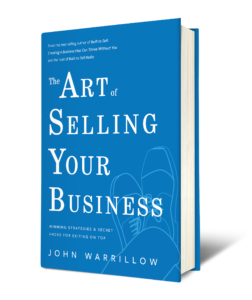
John Warrilow’s The Art of Selling Your Business
John Warrilow is the founder of The Value Builder System and an accomplished author. While not a business broker himself, Warrilow has gathered considerable knowledge and expertise on the industry. His previous book, Built to Sell, was listed as one of the best business books of 2011. In this article, we will explore some of the key points in Warrilow’s latest book, which is entitled The Art of Selling Your Business: Winning Strategies and Secret Hacks for Exiting on Top. This book was released on January 12th, 2021, and is proving to be invaluable for business owners.
Table of Contents:
Selling When the Time Is Right
One key focal point of the book is that business owners should skip trying to find the perfect “magical time” to sell their business. Additionally, Warrilow notes, “I make the strong recommendation in the book that the best time to sell your company is not during some mysterious macroeconomic environment. It is when someone is willing to buy it, and you get an offer. And that is because at that point, you’re in the position of strength.”
The DIY Approach
This book reinforces the fact that business owners truly need to work with an intermediary if they are to achieve optimal results. Warrilow even includes his six reasons why every business owner should hire a business broker or M&A advisor.
Many business owners think that they can simply handle selling their business on their own. But the simple fact is that business owners usually have no experience in selling a business. Add this to the fact that selling their business is likely to be the most important financial decision the business owner ever makes, and it quickly becomes clear that business owners are doing themselves a considerable disservice when they opt to handle everything on their own.
A Business Broker vs. A Lawyer
As Warrilow points out, oftentimes, business owners think that rather than working with a business broker or M&A advisor, they can turn to a trusted lawyer who has served them in the past. But this thinking is flawed when it comes to successfully selling a business. As Warrilow states, “a lawyer, almost by default, is going to be very conservative as everything exposes a lawyer to risk. And that is why using a traditional attorney is almost always a mistake.”
If you are planning to sell your business now or in the future, a book like Warrilow’s The Art of Selling Your Business: Winning Strategies and Secret Hacks for Exiting on Top can serve as a uniquely valuable tool in your toolbox.
Copyright: Business Brokerage Press, Inc.
The post John Warrilow’s The Art of Selling Your Business appeared first on Deal Studio – Automate, accelerate and elevate your deal making.

Getting the Most Out of Confidentiality Agreements
When it comes to buying or selling a business, there is no replacement for a solid confidentiality agreement. One of the key ways that business brokers and M&A advisors are able to help buyers and sellers alike is through their extensive knowledge of confidentiality agreements and how best to implement them. In this article, we will provide you with an overview of what you should expect out of your confidentiality agreements.
A confidentiality agreement is a legal agreement that essentially forbids both buyers and sellers, as well as related parties such as agents, from disclosing information regarding the transition. It is a best practice to have a confidentiality agreement in place before discussing the business in any way and especially before divulging key information on the operation of the business or trade secrets.
While a confidentiality agreement can be used to keep the fact that a business is for sale private, that is only a small aspect of what modern confidentiality agreements generally seek to accomplish. Confidentiality agreements are used to ensure that a prospective buyer doesn’t use any proprietary data, knowledge or trade secrets to benefit themselves or other parties.
When creating a confidentiality agreement, it is important to keep several variables in mind, such as what information will be excluded and what information will be disclosed, the term of the confidentiality agreement, the remedy for breach, and the manner in which confidential information will be used and handled.
Any effective confidentiality agreement will contain a variety of key points. Sellers will want their confidentiality agreement to cover a fairly wide array of territory. For example, the confidentiality agreement will state that the potential buyer will not attempt to hire away employees. In general, this and many other details, will have a termination date.
The specifics of how confidentiality is to be maintained should also be included in the confidentiality agreement. Parties should agree to hold conversations in private; this point has become increasingly important due to the use of mobile phones and in particular the use of mobile phones in out-of-office locations. Additionally, it is prudent to specify that principal names should not be used in outside discussions and that a code name should be developed for the name of the proposed merger or acquisition.
Safeguarding documents is another area that should receive considerable attention. Digital files should be password-protected. All paperwork should be kept in a safe location and locked away for maximum privacy when not in use.
In their enthusiasm to find a buyer for their business, many sellers have overlooked the confidentiality agreement stage of the process. Most have regretted doing so. A confidentiality agreement can help protect your business’s key information from being exploited during the sales process. Any experienced and capable business broker or M&A advisor will strongly recommend that buyers and sellers always depend on confidentiality agreements to establish information disclosure perimeters.
Copyright: Business Brokerage Press, Inc.
The post Getting the Most Out of Confidentiality Agreements appeared first on Deal Studio – Automate, accelerate and elevate your deal making.

How to Optimize Your Chances of Selling Your Business
The simple fact is that selling your business is likely to be the single most important financial decision you’ll ever make. With this important fact in mind, you must prepare far in advance. Let’s dive in and take a look at some of the key items you’ll want to check off your list before placing your business on the market.
Table of Contents:
- Think About Legalities
- Deal with Serious Buyers
- Be Flexible on Price
- Improving Your Chances for Success
Think About Legalities
When it comes to selling a business, legal issues should be at the forefront of your thoughts; after all, selling your business does involve the creation and execution of a complex and detailed legal agreement. There are many times in life where it is possible to cut corners, but hiring a good lawyer or law firm is not one of those times. Moreover, you’ll want to settle all litigation, environmental issues or other issues that could potentially derail a sale.
Deal with Serious Buyers
Working with a good business broker or M&A advisor is an essential part of the selling process, as these professionals will help you to weed out “window shoppers” as well as prospective buyers who are simply not a good fit for your business. Any serious buyer should be willing to submit a Letter of Intent. Everyone should be on the same page as far as price and terms as well as what assets and liabilities are to be assumed. This second point reinforces the first point. It is essential to have an experienced lawyer helping you through various aspects of the sales process.
Be Flexible on Price
You should also be prepared to accept a lower price than you might ideally want. There are many reasons that this may occur, ranging from a lack of management depth and a lack of geographical distribution to a dependence on a limited number of clients. Reliance on a small number of customers and/or clients can give potential buyers pause, as it could raise concerns regarding the stability of your business. Addressing these issues years before placing your business on the market can help you best achieve the price point you desire. This is yet another reason to work with a business broker in advance.
Improving Your Chances for Success
In terms of achieving the price that you want for your business, there are other steps you can take. Increasing the visibility and profile of your business is always a savvy move. Consider attending trade shows, boost your online profile via stepping up your social media game and explore creating a coherent public relations program.
Finally, selling a business is often a waiting game. You have to be psychologically prepared to wait a considerable period of time before your business is sold. The fact is that most businesses do indeed sit on the shelf for a considerable period of time before they are sold.
Preparation, patience and good organization will dramatically increase your chances of selling your business and achieving an appropriate price. The sooner you begin organizing your business and working with experienced professionals, the greater the chances of success will be.
Copyright: Business Brokerage Press, Inc.
Jirapong Manustrong/BigStock.com
The post How to Optimize Your Chances of Selling Your Business appeared first on Deal Studio – Automate, accelerate and elevate your deal making.

Turn to the Professionals for Best Results
There is a direct relationship between the asking price and the
amount of cash on the table at the time of the sale. Buyers and sellers alike should keep one fact in mind. Most businesses involve some level of seller financing. It is customary for both buyers and sellers to have concerns regarding this kind of financing; after all, sellers don’t want to take their businesses back from the buyer. Buyers want to generate enough money to help the business thrive and make a living. One proven way to ensure the successful sale of a business is to turn to the experts.
Table of Contents:
Screen out Window Shoppers
The simple and very established fact is that when you choose to work with the professionals, it can streamline the entire sales process. Business owners are typically very busy people. That means they don’t have time to waste with window shoppers. They also don’t want to divulge confidential information to parties that don’t possess the means to actually follow through with a successful sale.
Business brokers and M&A advisors know that most prospective buyers are just dreamers or will ultimately fail to qualify. When you work with the professionals, it means that you have a shield to protect you and your valuable time. Experienced brokers have a range of techniques that screen out unqualified candidates and match you with buyers who are the best fit.
Maintain Confidentiality
Anyone who has ever sold a business, or even contemplated selling a business, knows all too well that confidentiality is of the utmost importance. Sellers need to know that the information they reveal will not spill out all over the web. Brokers are experts maintaining confidentiality and impressing upon prospective buyers the tremendous importance of honoring the agreements they sign.
It is important to note that leaks regarding the sale of a business can cause a range of often unexpected problems. Key employees may get nervous about their future prospects and begin looking for a new job, competitors may begin attempting to poach employees, or customers and key suppliers may get nervous and turn to your competitors. In short, serious buyers and sellers alike benefit from maintaining confidentiality.
Matching the right seller with the right buyer is truly an art and a science. Many factors are involved ranging from financing to psychology. When the right match is made, then it is possible to move through the process of seller financing more quickly and with fewer roadblocks or complications. Working with a business broker or M&A advisor is the single most important step that any buyer or seller can make to help ensure that seller financing, and in fact the entire sales process, progresses as smoothly as possible.
Copyright:Business Brokerage Press, Inc.
The post Turn to the Professionals for Best Results appeared first on Deal Studio – Automate, accelerate and elevate your deal making.

Confidential Business Reviews Should Establish Trust

When you are selling a business, your business broker or M&A Advisor will likely create a Comprehensive Business Review, or CBR. This comprehensive document can then be presented to prospective buyers once they have signed all necessary confidentiality documentation. It is essential that this document builds trust between both parties, as this will go a long way towards achieving a successful deal.
Table of Contents:
Be Honest
The bottom line is that your CBR will be 95% positive. The majority of the document will be dedicated towards selling and promoting your business. Therefore, it only makes sense to disclose some potential problems. When handled correctly, the disclosure of problems can actually be a strong asset.
For example, current weaknesses of your business could become strengths in the mind of the buyer. For example, a business with a very poor online presence represents a substantial opportunity for a buyer to improve marketing and communications. Summed up another way, don’t be afraid to include negative information, especially if that information represents an opportunity.
Sharing Information
It is important that there is an element of trust between the parties. Creating that sense of trust begins with the CBR’s seller section.
Buying a business is radically different from buying a home. When someone buys a home, they usually don’t care too much about the person who they are buying the home from. But buying a business is usually a different experience. Your buyer will want to feel as though they have a fairly clear understanding of who you are and what you are about.
In the seller’s section, the buyer should get a decent idea of who you are. Your broker or M&A Advisor will want to interview you to gain ample information to include in your CBR. Your broker may even want to find out about your family, hobbies, interests and more. You may even want to consider including photos of yourself and your family.
The bottom line is that a potential buyer should be able to pick up the CBR and get a good feel for what you are like. If no level of trust is ever established between the buyer and seller, then it will be much more challenging for the deal to be successful.
Copyright: Business Brokerage Press, Inc.
The post Confidential Business Reviews Should Establish Trust appeared first on Deal Studio – Automate, accelerate and elevate your deal making.

Essential Meeting Tips for Buyers and Sellers
The buyer-seller meeting is quite often a “make or break” meeting. Your business broker or M&A Advisor will do everything possible to ensure that this meeting goes as well as possible.
It is vitally important to realize that rarely is there an offer before buyers and sellers actually meet. The all-important offer usually comes directly after this all-important meeting. As a result, you want to ensure that meetings are as positive and productive as possible.
Buyers need to understand how the process of selling a business works and what is expected of them from the process. Buyers also need to understand that following their broker’s advice will increase the chances of a successful outcome.
Sellers should be ready to be honest and forthcoming during the meeting. They also want to be sure to not say or do anything that could come across as a strong-armed sales tactic.
Table of Contents:
Asking the Right Questions
If you are a buyer preparing to meet a business owner for the first time, you’ll want to make sure any questions you ask are appropriate and logical. It is important for buyers to place themselves in the shoes of the other party.
Buyers also shouldn’t show up to the buyer-seller meeting without having done their homework. So be sure to do a little planning ahead so that you are ready to go with good questions that show you understand the business.
Building A Positive Relationship
Buyers should, of course, plan to be polite and respectful. They should also be prepared to avoid discussing politics and religion, which often can be flashpoints for confrontation. When sellers don’t like prospective buyers, then the odds are good that they will also not place trust in them.
For most sellers, their business is a legacy. It quite often represents years, or even decades, of hard work. Needless to say, sellers value their businesses. Many will feel as though it reflects them personally, at least in some fashion. Buyers should keep these facts in mind when dealing with sellers. A failure to follow these guidelines could lead to ill will between buyers and sellers and negatively impact the chances of success.
Sellers Should Be Truthful
Sellers also have a significant role in the process. While it is true that sellers are trying to sell their business, they don’t want to come across as a salesperson. Instead, sellers should try to be as real and honest as possible.
Every business has some level of competition. With this in mind, sellers should not pretend that there is zero competition. A savvy buyer will be more than a little skeptical.
The key to a successful outcome is for business brokers and M&A Advisors to work with their buyers and sellers well in advance and make sure that they understand what is expected and how best to approach the buyer-seller meeting. With the right preparation, the odds of success will skyrocket.
Copyright: Business Brokerage Press, Inc.
The post Essential Meeting Tips for Buyers & Sellers appeared first on Deal Studio – Automate, accelerate and elevate your deal making.

Seller Financing: It Makes Dollars and Sense
When contemplating the sale of a business, an important option to consider is seller financing. Many potential buyers don’t have the necessary capital or lender resources to pay cash. Even if they do, they are often reluctant to put such a hefty sum of cash into what, for them, is a new and untried venture.
Why the hesitation? The typical buyer feels that, if the business is really all that it’s “advertised” to be, it should pay for itself. Buyers often interpret the seller’s insistence on all cash as a lack of confidence–in the business, in the buyer’s chances to succeed, or both.
The buyer’s interpretation has some basis in fact. The primary reason sellers shy away from offering terms is their fear that the buyer will be unsuccessful. If the buyer should cease payments–for any reason–the seller would be forced either to take back the business or forfeit the balance of the note.
The seller who operates under the influence of this fear should take a hard look at the upside of seller financing. Statistics show that sellers receive a significantly higher purchase price if they decide to accept terms. On average, a seller who sells for all cash receives approximately 70 percent of the asking price. This adds up to approximately 16 percent difference on a business listed for $150,000, meaning that the seller who is willing to accept terms will receive approximately $24,000 more than the seller who is asking for all cash.
Even with these compelling reasons to accept terms, sellers may still be reluctant. Selling a business can be perceived as a once-in-a-lifetime opportunity to hit the cash jackpot. Therefore, it is important to note that seller financing has advantages that, in many instances, far outweigh the immediate satisfaction of cash-in-hand.
- Seller financing greatly increases the chances that the business will sell.
- The seller offering terms will command a much higher price.
- The interest on a seller-financed deal will add significantly to the actual selling price. (For example, a seller carry-back note at eight percent carried over nine years will double the amount carried. Over a nine-year period, $100,000 at eight percent will result in the seller receiving $200,000.)
- With interest rates currently the lowest in years, sellers can get a much higher rate from a buyer than they can get from any financial institution.
- The tax consequences of accepting terms can be much more advantageous than those of an all-cash sale.
- Financing the sale helps assure the success of both the sale and the business, since the buyer will perceive the offer of terms as a vote of confidence.
Obviously, there are no guarantees that the buyer will be successful in operating the business. However, it is well to note that, in most transactions, buyers are putting a substantial amount of personal cash on the line–in many cases, their entire capital. Although this investment doesn’t insure success, it does mean that the buyer will work hard to support such a commitment.
There are many ways to structure the seller-financed sale that make sense for both buyer and seller. Creative financing is an area where your business broker professional can be of help. He or she can recommend a variety of payment plans that, in many cases, can mean the difference between a successful transaction and one that is not. Serious sellers owe it to themselves to consider financing the sale. By lending a helping hand to buyers, they will, in most cases, be helping themselves as well.
The post Seller Financing: It Makes Dollars and Sense appeared first on Deal Studio – Automate, accelerate and elevate your deal making.

Great Tips for Selling Your Business
It takes preparation and focus to sell most businesses. The reality of the situation is that it can take years to achieve this goal. Partnering with a business broker or M&A Advisor is a smart step towards selling any business, as these pros know the very best tips. In that spirit, let’s take a look at some great tips for selling your business.
Getting your business ready to sell means carefully evaluating the foundation. Any significant problem can send buyers “running for the hills,” so be sure that you work out any problems well before placing your business on the market. If you have any litigation or environmental issues, you most definitely want to address those issues before it is time to sell. Nothing will scare away prospective buyers quicker than pending litigation or the specter of a potentially costly environmental clean-up.
A second key issue you’ll want to address is determining who exactly has the legal authority to sell the business. Suppose a board of directors or majority stockholder situation is in place. In that case, selling a business can become more complex than it would be if you were dealing with a sole proprietorship or partnership. Again, the last thing you want is for “legal surprises” to occur when you get ready to sell a business.
If you have non-negotiable items, be certain that those items are discussed upfront. Revealing your non-negotiable items at the very beginning of negotiations will save everyone involved a great deal of trouble.
Tip three involves maintaining a flexible mindset. In most circumstances, you simply can’t have everything that you want. Both buyers and sellers need to be flexible. Sellers will want to be flexible about any real estate. Buyers may not want real estate associated with a given business, and you need to be prepared for this. Sellers should also be prepared to accept valuation multiples for lack of management depth and other factors, such as reliance on a small number of customers.
At the end of the day, sellers should partner with experienced professionals such as attorneys and business brokers. You’ve put a lot of time, energy and resources into building your business. When it comes time to sell, it is only prudent to put together the best team in order to achieve optimal results.

Should You Sell Your Family Business?
When the complicating variable of family is added to the equation of selling a business, the situation can get rather messy. Family usually complicates everything and businesses are, of course, no exception. Ken McCracken’s recent article “Family business: to sell or not to sell?” 6 questions to help you make the right decision” seeks to decode the complexities so often associated with family businesses.
Table of Contents:
Consider the Market
The foundation of determining whether or not now is the right time to sell must begin with market forces. Determining how much your business is worth is a key variable in any decision to sell.
The best way to determine the worth of your business is to have an outside party, such as a business broker, evaluate your business. What you believe your business to be worth and what the market dictates could be very different. You may discover that your business does not have the value that you hoped for. If this is the situation, then selling simply may not be an option.
What is Next for You?
Tied to knowing your market value is understanding what you will do next after you sell your business. For example, do you have a family member who can run the business without you? What will you and any family members who work for the business do after the sale goes through? You may discover that the sale could be very disruptive for you personally. All too often, people fail to recognize the emotional and mental stress that comes along with selling a business. Many owners begin the selling process only to discover that they are not emotionally ready to do so. While everyone wants to be unemotional in making their business decisions, this is not always the case.
Due Diligence
You will also need to deal with the issue of due diligence. Working with a business broker is an excellent way to handle the due diligence process. Business brokers usually vet prospective buyers ahead of time, which can save you a great deal of aggravation and wasted time.
McCracken believes business owners should investigate how the prospective buyer handled previous acquisitions. Specifically, McCracken believes that business owners should look to how well the prospective buyer honored previous commitments, as doing so is an indicator of how trustworthy a buyer may be.
Planning for Negotiations
Finally, McCraken believes it is essential to know who will oversee negotiations. It is key to note that many deals that could have otherwise been successful, fall apart due to poor negotiations. A business broker can be invaluable in negotiations. After all, who wouldn’t want someone with dozens, or even hundreds, of successful transactions advising them?
Selling a family business can be emotionally charged and can cause significant life changes for not just you, but for members of your family as well. Often, family businesses were built up over a lifetime or even over generations, which can make the decision to sell quite emotionally charged.