



3 Overlooked Areas to Consider When Buying a Business
There are undoubtedly a multitude of factors involved in buying a business. Since there are so many variables involved, it is easy to neglect some important aspects. In this article, we will explore some of the key areas that can be overlooked when buying a business. Three areas in particular warrant special attention.
Table of Contents:
#1 Legal Documents
Upon first glance, it might seem obvious that all legal documents should be evaluated; however, many buyers forget that all legal documents are important and should be given weight. In short, there is no such thing as an irrelevant legal document, as one never knows what problems could be lurking within any given legal document.
For this reason, you’ll want to carefully examine any legal document before making a purchase. The stakes are simply too high to not evaluate everything from trademarks and copyrights to leasing agreements.
#2 W-2 and 1099 Forms
It is important to note whether or not 1099 forms were given out instead of W-2 forms. The reason is that the IRS has very specific rules regarding these forms. The last thing that any buyer of a business wants is to sign on the dotted line only to discover that there are problems with the IRS. Taking ownership of a new business only to learn that there are IRS issues is something that should clearly be avoided.
#3 Retirement Plans
Just as it is vital to look over all financial documents, including W-2 and 1099 forms, the same holds true to evaluating retirement plans. You shouldn’t buy a business unless you know if the business’s qualified and non-qualified retirement plans are completely up to date with the Department of Labor. A failure to properly evaluate a given company’s retirement plans can be a very costly mistake.
Ultimately, many potential topics can be overlooked when buying a business. In this article, we outlined three areas, but in reality, there are many more. This fact underscores the tremendous importance of working closely with a business broker, as well as other trusted professionals, such as lawyers and accountants, in order to properly vet any business that you are considering. One of the key steps in buying any business is to take every possible step to perform due diligence. No business is a flawless enterprise, but a seasoned business broker or M&A advisor can help you to successfully chart a path forward.
Copyright: Business Brokerage Press, Inc.
The post 3 Overlooked Areas to Consider When Buying a Business appeared first on Deal Studio – Automate, accelerate and elevate your deal making.

Disruptive Factors in Selling Your Business
At some point, every business owner will need to think about selling his or her business. This means you’ll need to be ready to overcome a range of obstacles, as the process of selling a business can be both confusing and time-consuming. This is especially true for those who have not gone through the process before. Let’s turn our attention to some of the key reasons why deals can fall apart.
Table of Contents:
Psychological Factors
Buyers, like sellers, enter the process with a variety of preconceived notions about how the process should work, as well as what they consider to be “a great deal.” The psychological factors involved in selling a business shouldn’t be overlooked.
Sellers need to understand the specific wants and desires of the buyer as well as their own psychology.
Even serious buyers may have highly unrealistic expectations regarding various aspects of a business, ranging from its price to its opportunities for future growth. In some cases, they may stall due to the fact they are not quite ready to buy a business and see no urgency in the matter.
Buyers can also be influenced by outside parties, whether advisors or friends and family. In short, sellers may discover that, for all practical purposes, buyers may actually be several people who are forming a collective opinion on issues regarding the business.
Seller Psychology
A seller’s own psychology can play a huge role in whether or not a business is successfully sold. Many sellers enter into the process without a full understanding of what is involved. This factor, of course, underscores the tremendous importance of working with professionals months, if not years, before you actually place your business on the market. These professionals should include an M&A Advisor or Business Broker.
Another major obstacle is that many sellers have unrealistic expectations about both price and the time frame in which their business can be sold. Sellers should enter the selling process with their eyes open and realistic expectations in place. Be sure to establish a fair price. It’s also important to understand that it may take a year or longer before a buyer is found.
Acts of Fate
Sellers should remember that there are many “acts of fate” that can disrupt a deal. A deal may seem like everything is moving along without problems, only to discover at the last minute that the buyer isn’t able to secure the needed funds as expected.
It is important for all parties involved to realize that until a deal is finalized, problems can still arise. In fact, they can arise from unexpected directions. But it is difficult to anticipate and spot every potential disruption. The complexity of selling a business is one of the main reasons why so many business owners opt to work with a brokerage professional.
Copyright: Business Brokerage Press, Inc.
The post Disruptive Factors in Selling Your Business appeared first on Deal Studio – Automate, accelerate and elevate your deal making.
Read More
The Importance of Quality Negotiations
When it comes to finalizing deals, successful negotiations are at the heart of the matter. It only makes sense to think about how to improve your communication skills and to choose a Business Broker or M&A Advisor who is well-versed in the art of negotiation.
Table of Contents:
Cultivating Win-Win Situations
Achieving a win-win for all parties is essential, and there are many components involved. It’s essential to understand what the other party is seeking and to help them also feel as though they succeeded in the deal.
One tried and tested strategy is to lead people through a series of “yeses” by starting with topics and points that can be agreed upon and then working forward. In the beginning of this negotiating strategy, the yeses may come from getting others to agree on what may be seen as trivial things. However, this step works to create the right climate for moving forward so that yeses can be obtained on more important issues.
Maintaining the Flow of Information
The flow of information is a critical aspect of the negotiation process. For this reason, it’s best for negotiations between buyers and sellers to go through their brokerage professionals, rather than conducted directly.
The simple fact is that otherwise there are too many variables and opportunities for something to go wrong, ranging from egos getting in the way to miscommunications. When you choose a qualified Business Broker or M&A Advisor, you’ll be able to place trust in that person to achieve optimal outcomes.
Understand One Another
It is important to keep the other side talking and show that you understand their perspective and the issues they may have. It is in this way that you can encourage cooperation and diffuse resistance in advance.
Ultimately, great negotiations stem from proper strategy, preparation, proper education, enhanced communication, and understanding the other party’s needs. When you and your Business Broker or M&A Advisor foster good communications with the other party, it will enhance the chances of achieving the kind of cooperation you are seeking. This in turn, dramatically increases the chances of achieving win-win outcomes.
Copyright: Business Brokerage Press, Inc.
The post The Importance of Quality Negotiations appeared first on Deal Studio – Automate, accelerate and elevate your deal making.

The 5 Must-Do’s When Considering Buying Any Business
There is no doubt that buying a business can be a very exciting idea; however, it is critical that prospective buyers don’t lose track of what is truly important. Let’s explore the five most important steps that any buyer needs to take when evaluating a business. The simple fact is that as a buyer, you have no choice but to look beyond the sizzle and work to find the steak. In other words, it’s essential to determine the true worth of a given business.
Table of Contents:
#1 Evaluate What is Actually Being Sold
No buyer should assume that he or she understands everything that is, or is not, being sold when buying a business. One of the most important tasks for any buyer is to carefully evaluate the business under consideration and invest the time to understand what the business does and what is included in the sale. This is a task that your Business Broker or M&A Advisor will perform as well.
#2 Understand Business Performance
Understanding the performance of a business can be more complex than it initially appears. On one hand, the numbers don’t lie, and it is possible to quickly evaluate the bottom line.
However, in the process of evaluating the business, you and your Business Broker or M&A Advisor might discover that there are many flexible factors that could quickly alter how well the business performs. For example, you’ll want to take into account the number of hours the current business owner is working and if key employees are contributing enough to the business. These are just two of a wide variety of factors that could influence overall performance.
#3 Look at the Financials
Ultimately, there is no replacement for understanding the current financials of a business. Perhaps a business has all the potential in the world, and you can easily see that potential. However, remember that almost all buyers must obtain financing; this means that it is usually critical that the business has strong financials in its current state. Before considering any business, you and your team of professionals will want to carefully evaluate profit and loss statements, tax returns, balance sheets, and other important financial documents.
#4 Evaluate the Business Plan
Understanding the current owner’s goals and what steps they’ve outlined to achieve those goals is a key step. As a new owner, you’ll want to know that there is a path forward for growing your business, and a business plan is essential for achieving that goal.
#5 Look at the Demographics
One of the single best ways to grow your business is to understand your customers. For this reason, it is important that you have a clear understanding of the demographics of the business and why customers should remain loyal. If there are challenges on the horizon, such as an expanding competitor or a new competitor entering the arena, then you’ll want to know this information as well.
Evaluating a business is not a simple process. Working closely with a brokerage professional who has years of experience in evaluating all types of businesses is essential. This is an excellent first step towards buying the right business for your needs.
Copyright: Business Brokerage Press, Inc.
monkeybusinessimages/BigStock.com
The post The 5 Must-Do’s When Considering Buying Any Business appeared first on Deal Studio – Automate, accelerate and elevate your deal making.

Important Points for Selling to a Family Member
Eventually every business owner will have to turn over control of their business to someone else. There are many options for how this can play out. They range from selling the business to a prospective buyer or selling to a competitor, to turning your business over to a family member. It is key that you start thinking about these options years before you end up in a situation where you actually have to sell.
Table of Contents:
Working with a Business Broker or M&A Advisor is one way to determine what sales options are optimal for you based on your specific situation. Let’s explore some of the variables you’ll want to consider when you decide to transfer your business to a family member.
Tax Advantages
There are some significant advantages to transferring your business to a family member. No doubt topping the list of advantages of going this route is the fact that the transfer can be considered a gift. One advantage of this approach is that you’ll reduce your real estate taxes. Depending upon how the agreement is written, you also may be able to maintain some control over the business. For many business owners, this factor can be a big advantage.
Seller Financing
One issue you’ll want to explore when opting to transfer your business to a family member is seller financing. Seller financing is a common practice when it comes to buying and selling businesses in general. This type of financing is even more common where transfers to relatives are concerned.
Seller financing opens up the versatile option of implementing a private annuity. A private annuity can serve to spread payments out across a long period of time. This could be a win-win situation for both you and your relative. You would receive a long-term stream of income as a result of ongoing payments. In turn, this decision may very well make ownership more financially realistic for your relative.
Legal Agreements
Keep in mind that if you sell your business to a relative, this in no way negates the need for a buy-sell agreement. Even when you are dealing with your most trusted family members, legal agreements must be firmly in place. A buy-sell agreement is an invaluable tool that protects everyone involved.
This contract clearly outlines all aspects of the arrangement. Your buy-sell agreement should include such key information including the value of the business, amount being paid, information on which employees will be retained, the current business owner’s level of future involvement, and much more.
Working with Professionals
Ultimately, there are a range of potentially powerful benefits associated with transferring a business to a relative. While it is true that you can expect the IRS to closely evaluate the sale, this should not dissuade you from considering this option. Business Brokers and M&A Advisors are experts at buying and selling businesses, and they understand the specifics of transferring a business to relatives. Working with professionals early in the selling process can help you gain tremendous insight into the best way to proceed.
Copyright: Business Brokerage Press, Inc.
The post Important Points for Selling to a Family Member appeared first on Deal Studio – Automate, accelerate and elevate your deal making.

How to Circumvent Three Legal Mistakes Sellers Make
After decades of hard work, selling your business can be an exciting and rewarding time. Yet, many business owners overlook the importance of focusing on the legal matters associated with sales. In this article, we’ll explore three of the most significant mistakes sellers make.
Table of Contents:
1. Use an NDA
The first critical mistake that business owners should be guarding against is skipping the use of a non-disclosure agreement. Simply stated, a business owner should always make sure that a non-disclosure agreement is in place before disclosing to any buyers that a business is on the market.
NDA’s stand as an invaluable way to restrict who does and does not know your business is for sale. After all, the last thing any business owner looking to sell his or her business wants is for competitors or employees to learn confidential information.
2. Hire an Attorney
The second critical mistake that many business owners make is they skip working with an attorney. There is no way around the fact that if you are selling a business, or for that matter anything of significant value, you need to work with a lawyer experienced in the area of sales.
Business owners become accustomed to doing a great many things themselves and learning on the job. There is no doubt that this is a personality trait that has served them well over the years. However, when it comes time to sell your business, there is zero room for “on the job training” or relying on your own instincts. One of the best ways that you as a business owner can protect your future is to work with a lawyer when selling your business. In fact, a Business Broker or M&A Advisor can be a vital resource for helping you to find a proven lawyer with a background in the buying and selling of businesses.
3. Get a Letter of Intent
A third significant mistake that business owners frequently make when selling their business is that they fail to get a letter of intent. Much like an NDA, a letter of intent is a key legal document in the process of selling a business. All too often business owners will skip requesting a letter of intent out of fear of slowing down the process and potentially disrupting a deal.
The letter of intent is designed to both clearly spell out expectations, while simultaneously protecting your interests as a business owner. When a buyer signs a letter of intent, it indicates that he or she is taking the process seriously. This will protect you from wasting your time.
The process of buying or selling a business is complex in many different ways. Whether it is dealing with human psychology, organizing your books, thinking about what information prospective buyers are likely to want to see, or addressing a wide array of legal issues, it is a complex and time-consuming process. Working closely with a Business Broker or M&A Advisor is one of the fastest ways that you can increase your chances of a successful sale.
Copyright: Business Brokerage Press, Inc.
The post How to Circumvent Three Legal Mistakes Sellers Make appeared first on Deal Studio – Automate, accelerate and elevate your deal making.

Put Your Strengths First When Selling Your Business
You understand the finer points and potential of your business better than anyone; however, that doesn’t mean that prospective buyers will instantly see your business’s various strengths. When you are looking to sell your business, you have two very important jobs. The first is to get your business ready to be sold. A second essential job is to showcase your business’s greatest strengths. At the end of the day, you must be the one to articulate why your business is worth buying. This effort, of course, will be supported by your Business Broker or M&A Advisor.
Table of Contents:
Understand Who Will Buy Your Business
Most people have never sold a business before and don’t fully understand what is involved in positioning one’s business for sale. The bottom line is that not every business is a good fit for every buyer. Finding the right buyer for your business will greatly expedite the process. This is yet another reason why it is critically important to work with experienced professionals. Business Brokers and M&A Advisors not only know what buyers are looking for, but also what sellers need to do to get their business ready to sell.
How to Navigate Roadblocks
Selling a business, especially if you attempt to do so without professional help, is a very time-consuming and often draining process. Successfully running a business requires attention to detail and focus. Unfortunately, these can both suffer when owners attempt to put on yet another hat and handle the sale of their business.
While you are attempting to sell your business, it is critically important that you maintain normal operations. The last thing you want is to weaken the finances of your business while you are waiting to find a buyer. Remember that it takes months, a year, or even longer to find a buyer for the typical business. Don’t let your business suffer damage in the interim.
Think Like a Buyer
Preparing your business to be sold isn’t as simple as making a few cosmetic changes and calling it day. Instead, you’ll want to think like a buyer.
What would you want to see if you were buying a business? You would want to know a great deal about that business and how it operates, who its key employees are, how likely those key employees are to stay, who the main customers and suppliers are, and the strength of the business location and competitors. Of course, you would also want a very detailed picture of the business’s financial situation.
In short, you would want to clearly understand what the business does and what it’s really worth, how financially healthy it has been in the past, what the business’ prospects are moving forward and, in general, how much effort the business will take to operate. These are exactly the kind of key facts that any serious buyer will want to know. It’s only to be expected that a buyer would expect to learn this information before making a decision.
At the end of the day, working with a Business Broker or M&A Advisor is one of the easiest ways to streamline the sales process. Thanks to years of experience, they already understand the pitfalls that you may experience as well as what is needed to position your business so that you can find the right buyer quickly and receive the best price possible.
Copyright: Business Brokerage Press, Inc.
The post Put Your Strengths First When Selling Your Business appeared first on Deal Studio – Automate, accelerate and elevate your deal making.

Can Sellers Use Buyer Warning Signs to Their Advantage?
When buyers are looking to make a purchase, the most important step they can take is to perform due diligence on both the business and the seller. Yet, it is important to note that a large percentage of sellers fail to do their due diligence on buyers.
Deals fail all the time. Sadly, this means that all parties lose a tremendous amount of time and effort. Additionally, sellers not only waste time, but often lose money due to business disruptions during the process of working with a prospective buyer.
Let’s dive in and look at a few warning signs that you should look for when dealing with a buyer. The sooner you spot these red flags, the sooner you can avoid potential problems.
There are several key questions that sellers should ask. The list includes:
-What, if any, other businesses have you considered to date?
-How much equity will you be committing?
-Do you have any experience with my kind of business?
It is important to look for warning signs early on, as this is the way that sellers can avoid wasting considerable time. It should also be noted that sellers shouldn’t be afraid to listen to their gut instincts. If you feel that a prospective buyer isn’t serious and may only be window shopping (or if you feel that the buyer is looking for a far greater deal than you are willing to provide), then simply move on. When you cut your losses early on, this can free you up to focus on prospective buyers who are a better fit.
What if your intermediary informs you that there has been no communication from the prospective buyer after they received the memorandum? Simply stated, this lack of communication could mean that the prospective buyer has changed his or her mind, or was never that serious in the first place.
Another red flag you might see is when the process is turned over to a junior member of the prospective buyer’s management team. In other cases, the prospect may fail to provide details or information concerning their financial capability to successfully complete the deal. If any of these three red flags pop up, you should consider being proactive. You and your broker might want to reach out to the prospective buyer and ask to meet to discuss the situation.
Warning signs can also occur just prior to closing. Even after the letter of intent has been signed, there is still room for problems to arise. An inexperienced attorney representing the buyer, one that simply doesn’t understand what is involved in a deal, can spell doom for what could have otherwise been a good deal. The same is true for an over aggressive attorney. One potential remedy for this situation is for your own attorney to intervene and discuss the situation.
Spotting warning signs is about more than not wasting everyone’s time. When you can observe these indicators and act effectively to address them, it can help keep deals on track. Working with a business broker or M&A advisor is an excellent way to not only spot red flags, but also to know how to respond appropriately. The end result will be more successfully completed deals.
Copyright: Business Brokerage Press, Inc.
The post Can Sellers Use Buyer Warning Signs to Their Advantage? appeared first on Deal Studio – Automate, accelerate and elevate your deal making.

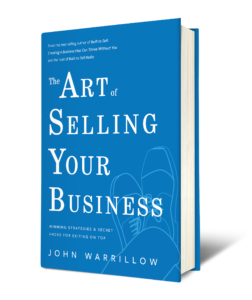
John Warrilow’s The Art of Selling Your Business
John Warrilow is the founder of The Value Builder System and an accomplished author. While not a business broker himself, Warrilow has gathered considerable knowledge and expertise on the industry. His previous book, Built to Sell, was listed as one of the best business books of 2011. In this article, we will explore some of the key points in Warrilow’s latest book, which is entitled The Art of Selling Your Business: Winning Strategies and Secret Hacks for Exiting on Top. This book was released on January 12th, 2021, and is proving to be invaluable for business owners.
Table of Contents:
Selling When the Time Is Right
One key focal point of the book is that business owners should skip trying to find the perfect “magical time” to sell their business. Additionally, Warrilow notes, “I make the strong recommendation in the book that the best time to sell your company is not during some mysterious macroeconomic environment. It is when someone is willing to buy it, and you get an offer. And that is because at that point, you’re in the position of strength.”
The DIY Approach
This book reinforces the fact that business owners truly need to work with an intermediary if they are to achieve optimal results. Warrilow even includes his six reasons why every business owner should hire a business broker or M&A advisor.
Many business owners think that they can simply handle selling their business on their own. But the simple fact is that business owners usually have no experience in selling a business. Add this to the fact that selling their business is likely to be the most important financial decision the business owner ever makes, and it quickly becomes clear that business owners are doing themselves a considerable disservice when they opt to handle everything on their own.
A Business Broker vs. A Lawyer
As Warrilow points out, oftentimes, business owners think that rather than working with a business broker or M&A advisor, they can turn to a trusted lawyer who has served them in the past. But this thinking is flawed when it comes to successfully selling a business. As Warrilow states, “a lawyer, almost by default, is going to be very conservative as everything exposes a lawyer to risk. And that is why using a traditional attorney is almost always a mistake.”
If you are planning to sell your business now or in the future, a book like Warrilow’s The Art of Selling Your Business: Winning Strategies and Secret Hacks for Exiting on Top can serve as a uniquely valuable tool in your toolbox.
Copyright: Business Brokerage Press, Inc.
The post John Warrilow’s The Art of Selling Your Business appeared first on Deal Studio – Automate, accelerate and elevate your deal making.

Why Businesses Get Into Trouble
No two companies are quite alike, and this also means that there are many reasons why companies can fall into trouble. While the number of variables involved in operating a company are practically endless, there are a handful of reasons why companies can fall on hard times. Let’s take a closer look.
Table of Contents:
Lacking Focus
Companies that lack focus can often run into considerable trouble. Not understanding their customers and what they need or want can lead to endless problems. It is vital that companies frequently stop and assess who their customers are and whether or not they are properly servicing their needs.
Management Problems
Not too surprisingly, many companies can run into trouble because of poor management. Management problems are not one-dimensional, but instead take a variety of shapes. Management that isn’t focused, is incompetent, or simply doesn’t care about the business can translate into a business’s premature death.
Under the umbrella of “management problems” also falls such missteps as poor financial controls, quality control problems, operational issues, and/or not keeping up with technological advancements. At the end of the day, many of the problems on our list have at least some management issue missteps at their heart.
Loss of Key Employees or Clients
The loss of a key employee or a key client can spell serious trouble. Of course, no management team can predict every eventuality. However, when there is a loss of a key employee or client, and there is no plan for replacement, then management does shoulder at least some of the blame. The savviest companies take steps to ensure that there are ways to replace the most important employees and clients.
Failure to Compete
More than one business has been buried by the competition or failure to see a new wave of competition coming. For example, countless mom-and-pop video rental stores were absolutely bludgeoned by the introduction of Blockbuster Video a generation ago.
While it is true that sometimes market forces are so aligned against a business that survival is almost impossible, that is normally not the case for most businesses on a year-to-year basis. The most effective and competent management can see the competition on the horizon. Or at the bare minimum, they have an emergency plan in the event that the competition becomes more intense.
All too often, by the time a business realizes that it is in trouble, it is already too late. If the problems can’t be fixed, then it may be time to consider selling the business. But such decisions must be made quickly in order to prevent additional bloodletting.
Optimally, a business is sold while it is doing well. Regardless of whether a business is thriving or experiencing difficulties, a business broker or M&A advisor can be an invaluable ally in helping a business reach its full potential.
Copyright: Business Brokerage Press, Inc.
The post Why Businesses Get Into Trouble appeared first on Deal Studio – Automate, accelerate and elevate your deal making.