



The Business Was Worth More Three Years Ago
We’ve had this conversation more times than we can count: an owner is finally ready to sell, but the business they’re bringing to market is no longer the business buyers would have paid a premium for three years earlier.
The business has been good to them. They’ve built something real. But when we dig into the financials, the picture is softer than it used to be. Revenue has plateaued. A couple of key people have left. The owner pulled back on reinvestment because, understandably, they didn’t want to spend money building something they were planning to hand off.
The business is still sellable. But it would have been worth more — often significantly more — when it still had momentum.
And by the time most owners realize that, the window to change it has already closed.
Most exits aren’t planned — they’re triggered
Business owners like to believe they’ll choose the right moment to sell. In practice, many transactions are set in motion by something that wasn’t part of the plan: a health scare, a partnership fracture, a key customer lost, a spouse who’s done waiting, or a competing offer that arrived out of nowhere.
Retirement can create its own version of this trap.
The business has been generating strong income for years, so the owner keeps running it. But their engagement quietly starts to fade. They stop taking on new opportunities. They skip the trade shows. They delay hiring. They let the strategic plan sit in a drawer.
None of this shows up immediately on a tax return.
But it shows up in momentum. And sophisticated buyers — along with their lenders — are very good at spotting the difference between a business that is still growing and one that is being held together.
What waiting actually costs you
The decline rarely happens in a single bad year. It happens in layers.
A sales hire gets delayed. A systems upgrade gets deferred. A competitor starts winning business you’re no longer fighting for. Key employees sense the drift and start taking calls from recruiters.
Often, the biggest missed investment isn’t equipment or marketing. It’s management depth. Owners who wait too long often discover they are still holding too many of the important customer, supplier, and employee relationships themselves. That owner dependence becomes a risk buyers can see — and price accordingly.
By the time the trailing twelve-month numbers start showing the damage, buyers may already be discounting your multiple. In some sectors, a business that might have attracted 4×–5× EBITDA during a period of consistent growth can be re-priced closer to 3× once revenue stagnates, customer concentration tightens, or the owner appears disengaged.
On a $5 million business, that gap isn’t rounding error. It can be the difference between a clean exit and a stressful one.
There’s also a less obvious cost: a declining trajectory limits your buyer pool.
Institutional buyers and PE-backed acquirers are generally not looking for turnaround situations in the lower-middle market. Declining momentum often leaves you negotiating with a smaller group of buyers, which is exactly the wrong position to be in when you finally decide to sell.
Selling from strength isn’t about being in a rush
The advice I give owners isn’t “sell now.”
It’s “start thinking seriously about this before you assume you have to.”
Those are very different things.
A business selling from a position of strength — growing revenue, high retention, clean books, and a management team that doesn’t depend entirely on the owner — commands a premium. It attracts more buyers, creates more competitive tension, and typically closes faster with fewer conditions.
The owner has leverage because they don’t need to sell. They are choosing to.
That leverage starts to disappear the moment the business shows cracks. Buyers sense when an owner is tired, when reinvestment has slowed, and when the next chapter is overdue.
Desperation is expensive.
What early planning actually looks like
For most owners, “early” means two to four years before a likely transaction.
Not because the sale itself takes that long — although preparation does matter — but because that is when the decisions that shape value are still in front of you.
Early planning helps you understand:
- what your business is actually worth in today’s market, not what you hope it is worth;
- which value drivers matter most to the buyers likely to acquire a business like yours;
- what gaps in your financial reporting, ownership structure, or operations may surface in due diligence;
- where the business is too dependent on you personally;
- what investments could still improve value before going to market;
- how different deal structures may affect tax, risk, and net proceeds.
None of this commits you to selling.
It gives you a clearer picture of your options — and enough time to act on them intelligently rather than reactively.
The best time to have this conversation is before you think you need it
If you’ve started thinking about what life looks like after the business — even as a distant question — that’s the right time to get a realistic read on where you stand.
Not because the answer will force your hand, but because knowing changes what’s possible.
Owners who engage early have options. They can strengthen the management team, clean up the financials, reduce customer concentration, improve systems, and make deliberate decisions about timing.
Owners who wait until circumstances decide for them are usually negotiating from the wrong side of the table.
If selling is even a two-to-four-year question, now is the right time to understand what your business may be worth, what buyers would care about, and what you can still improve before going to market.
That conversation does not mean you are ready to sell.
It means you are still early enough to do something useful with the answer.
Copyright: Business Brokerage Press, Inc.
The post The Business Was Worth More Three Years Ago appeared first on Deal Studio.

Should I Use A Business Broker to Sell My Business in Alberta?
Working with a qualified business broker is frequently one of the best choices you can make if you’re thinking about selling your company in Alberta. Experienced business brokers can streamline a complex process while optimizing value through everything from precise appraisal and private marketing to buyer screening and debt negotiations.
Read More
A $5M Offer Isn’t Always Worth $5M: Why Deal Structure Decides What You Actually Keep
Ask a business owner what their company sold for, and they’ll give you one number. Ask them what they actually walked away with — after debt payoff, taxes, the working capital adjustment, and the seller note that’s still being paid down — and you’ll get a very different answer, usually accompanied by a story.
Here’s the uncomfortable truth from the intermediary’s side of the table: two offers with the same headline price can differ by hundreds of thousands of dollars in real, after-tax, in-your-pocket proceeds. And the higher headline number isn’t always the better deal.
Table of Contents:
- Same Price, Very Different Deals
- The Questions That Actually Matter
- – How Much Cash Do You Need at Closing — Really?
- – Can the Business Carry Acquisition Debt?
- – Will You Carry Paper, and on What Terms?
- – Would You Keep Equity in the Business After the Sale?
- – What Does Each Structure Do to Your Tax Bill?
- Flexibility Widens Your Buyer Pool, and That’s Where Price Comes From
- Where an M&A Advisor Fits In
Same Price, Very Different Deals
Imagine two offers on a business listed at $5 million:
Offer A: $5 million — $3.25 million cash at closing, a $1 million seller note paid over five years, and $750,000 of “rollover equity”: instead of taking that portion in cash, the seller keeps an ownership stake in the business under its new ownership.
Offer B: $4.6 million, all cash at closing, buyer pre-approved for financing, 60-day close.
Offer A is “worth more” on paper. But look at what the seller is actually holding. The note makes them the buyer’s junior lender for five years — behind the bank, which will almost certainly require the note to go on full standby if the business hits a rough patch. And the rollover equity is a minority stake in a company they no longer control, with no guarantee of when — or at what value — they’ll be able to cash it out.
That doesn’t make Offer A a bad deal. Seller notes get paid in full far more often than owners fear, and rollover equity is how some sellers end up with a genuine “second bite of the apple” — if the new owners grow the business and sell it again in five or seven years, that retained stake can be worth more than the cash they gave up at closing. Spreading consideration across years can also carry meaningful tax advantages. The point isn’t that one structure is right. It’s that you can’t compare offers on price alone, and the time to think this through is before you go to market — not when two LOIs are sitting on your desk.
The Questions That Actually Matter
Long before a buyer ever sees your financials, you and your advisor should be able to answer:
How Much Cash Do You Need at Closing — Really?
Not what you’d like. What you need to retire debt, cover taxes, and fund whatever comes next. This number sets your floor and determines how much flexibility you can offer on terms.
Can the Business Carry Acquisition Debt?
Lenders and sophisticated buyers run the same math: take your adjusted earnings, subtract a market-rate salary for the new owner, subtract the annual debt payments the purchase price implies, and see what’s left. If that cushion is thin, your asking price isn’t financeable at conventional terms, no matter what the valuation report says. The structure has to bridge that gap, or the price has to come down.
Will You Carry Paper, and on What Terms?
A seller note of 10–20% of the purchase price is common, and it does real work: it bridges valuation gaps, it satisfies lenders who want the seller to have skin in the game post-closing, and it signals confidence in the business. But the terms matter enormously — interest rate, amortization, security, and what happens to your payments if the buyer’s bank invokes standby provisions.
Would You Keep Equity in the Business After the Sale?
Rollover equity isn’t for everyone. It works best when the seller believes in the buyer’s growth plan and can afford to have part of their proceeds illiquid for several years. If your goal is a clean exit and a clean break, say so early — it shapes which buyers your advisor should even bring to the table.
What Does Each Structure Do to Your Tax Bill?
What’s being sold, how the price is allocated, and when payments are received can swing your after-tax proceeds dramatically. This is jurisdiction-specific and worth a conversation with your accountant before you set an asking price, because some of the most valuable tax planning has to happen a year or more ahead of a sale.
Flexibility Widens Your Buyer Pool, and That’s Where Price Comes From
Here’s the part most sellers underestimate: structure doesn’t just affect what you keep from a given offer. It affects how many offers you get.
A business offered strictly as “all cash, full price, as-is” is only available to the small slice of buyers who can write that check or finance the entire amount conventionally. Add reasonable seller financing or openness to a rollover component, and the qualified buyer pool expands — and more qualified buyers competing is the single most reliable way to push price up. Sellers who demand maximum rigidity on terms frequently end up taking a lower price from the one buyer who could meet them. Flexibility isn’t a concession; it’s a negotiating asset.
Where an M&A Advisor Fits In
Your accountant knows your tax position. Your lawyer will protect you in the purchase agreement. But neither of them spends their days watching what buyers in your market are actually offering, what lenders are actually approving, and which structures are actually getting deals closed this year. That marketplace view is what a broker or experienced M&A advisor brings — and it’s most valuable early, when you’re still deciding whether and how to go to market, not after you’ve anchored yourself to a number that can’t be financed.
The businesses that sell well are rarely the ones with the highest asking price. They’re the ones packaged so that the price, the structure, and the financing all work together — for the seller’s bottom line and the buyer’s ability to say yes.
Copyright: Business Brokerage Press, Inc.
KostiantynVoitenko/BigStock.com
The post A $5M Offer Isn’t Always Worth $5M: Why Deal Structure Decides What You Actually Keep appeared first on Deal Studio.
Read More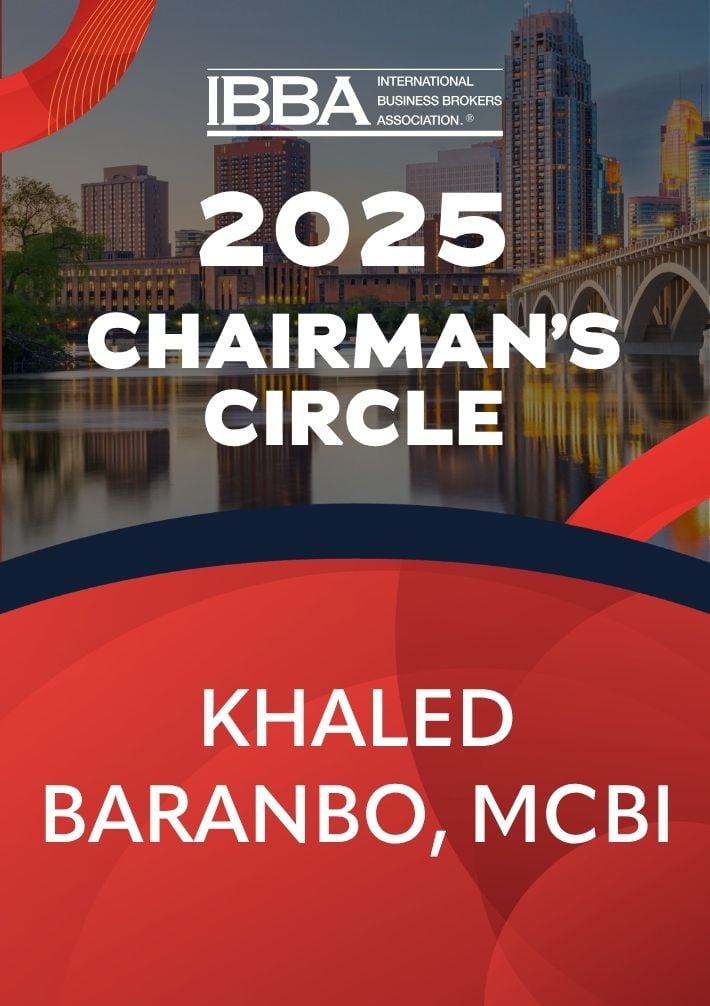
Khaled Baranbo Recognized by the International Business Brokers Association with Chairman’s Circle Award
Khaled Baranbo, Business Broker of Ontario Commercial Group, has been recognized by the International Business Brokers Association (IBBA) with the prestigious Chairman’s Circle Award for outstanding performance during 2025.
Read More
What is a Business Broker and Why Use a Business Broker in 2026
The initial stage of creating an assured and knowledgeable alternative if you’re considering buying or selling a corporation in Ontario is to understand the functions of a business broker.
Read More
Khaled Baranbo of Ontario Commercial Group Receives IBBA Deal Maker Award
Oakville, ON – June 8, 2026 – Khaled Baranbo, Business Broker at Ontario Commercial Group, has received the International Business Brokers Association’s (IBBA) Deal Maker Award in recognition of outstanding performance during 2025.
The award was presented at the 2026 IBBA Annual Conference in Minneapolis, Minnesota. The IBBA is the world’s largest professional trade association for business brokers and M&A advisors.
The IBBA Deal Maker Award is given to individuals who sold at least 10 qualified businesses during the 2025 calendar year.
“I’m honoured to receive the Deal Maker Award from the IBBA. This recognition reflects the trust our clients place in us and the dedication our team brings to every transaction. We remain committed to helping business owners navigate the sale process with confidence, confidentiality, and a clear strategy to achieve strong outcomes,” said Khaled Baranbo.
According to Emily Bowler, Executive Director of the International Business Brokers Association, the organization’s Member Excellence Awards recognize top-performing professionals in the business brokerage industry.
“The professionals recognized through the IBBA’s Member Excellence Awards program represent the highest standards of our profession. Their dedication, expertise, and commitment to helping business owners successfully transition their businesses have a lasting impact on entrepreneurs, employees, families, and communities. We are proud to recognize Khaled Baranbo for this outstanding achievement and their contributions to the business brokerage industry.”
IBBA individual awards are presented annually based on qualified business transactions completed during the previous calendar year. The Member Excellence Awards program highlights professionals who demonstrate excellence in business brokerage and M&A advisory services.
For more information about Khaled Baranbo and Ontario Commercial Group, visit www.ontario-commercial.com or contact 416-575-4032.
About Ontario Commercial Group
Ontario Commercial Group is an Oakville-based business brokerage and M&A advisory team serving entrepreneurs, investors, and business owners across Ontario. For more than 20 years, the firm has provided business brokerage, valuation, acquisition search, and commercial real estate services, with a focus on confidential representation, careful preparation, and successful transaction execution for privately held businesses.
About the International Business Brokers Association (IBBA)
Founded in 1984 and with more than 3,000 members worldwide, the International Business Brokers Association (IBBA) is the largest international non-profit association operating exclusively for people and firms engaged in business brokerage and mergers and acquisitions. The IBBA provides education, conferences, professional designations, networking opportunities, and resources to support the business brokerage profession and the successful transfer of business ownership.
For more information, visit www.ibba.org.
Read More
Why Buying A Business Could Be Your Smartest Path to Entrepreneurship
Buying A Business provides prospective business owners with a feasible, effective, and likely less hazardous path to company ownership.
Read More